

Punishment After the Batavia Mutiny
Film
Treasures and Tragedies
New Discoveries from the Batavia Story
Recently uncovered artefacts reveal the harrowing events of the 1629 Batavia mutiny
This showcase features extraordinary objects recovered during the Shipwrecks of the Roaring Forties project (2015–2018), shedding new light on the Batavia mutiny. Items range from personal possessions and ship fittings to grim reminders of violence and justice, each connected to the dramatic events on the Houtman Abrolhos Islands. Discover the stories behind a lice comb from a mutiny victim’s grave, lead musket balls possibly used for dental pain, wooden book covers from the wreck site, gaming tokens from West Wallaby Island, and a brutal improvised weapon from Long Island, believed to be part of the site where mutineers were executed.
Transcript
This showcase presents objects from some of the most recent finds related to the Batavia story, uncovered at the Abrolhos Islands. Between 2015 and 2018, the Shipwrecks of the Roaring Forties project revisited many of these sites, particularly the land sites connected to the mutiny.
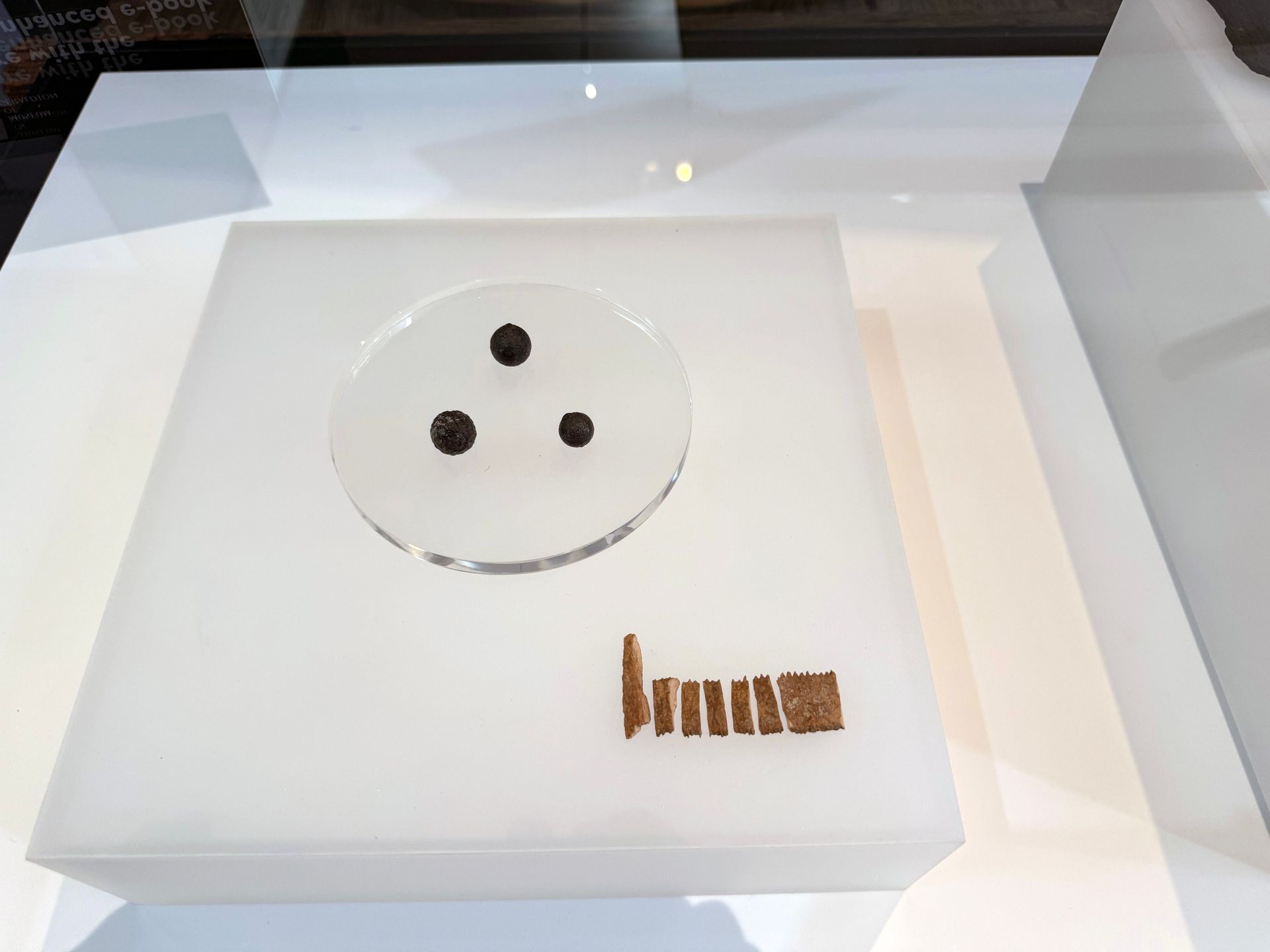
As part of the Batavia mutiny story, we’re looking at finds from Beacon Island, Long Island, East Wallaby Island, and West Wallaby Island. Among the items are a lice comb and three lead musket balls, discovered in the grave of a mutiny victim. The comb was likely a personal grooming tool. The musket balls were not linked to the cause of death, they may have been carried in a pocket or even sucked on to help with dental pain, a common practice at the time.
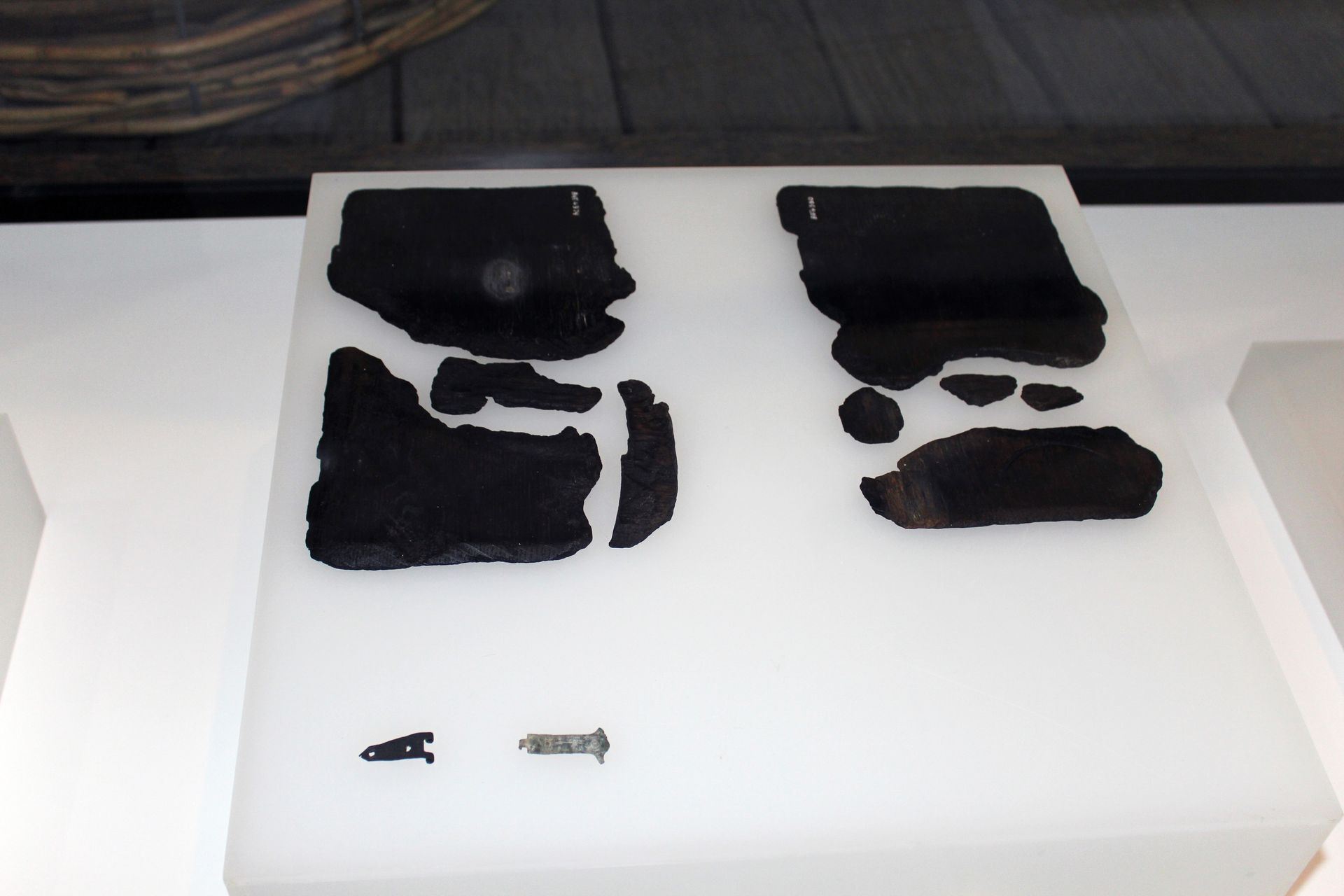
We also have wooden book covers and a book clasp from the wreck site on Morning Reef, raised by maritime archaeologists in the 1970s. For comparison, a similar clasp found on West Wallaby Island prompts us to imagine the kinds of books, perhaps a Bible, that survivors and soldiers might have taken with them when Cornelisz sent them to the so-called High Islands.
Two small lead tokens from West Wallaby Island may have been gaming pieces, used by soldiers passing the time while defending against mutineers.
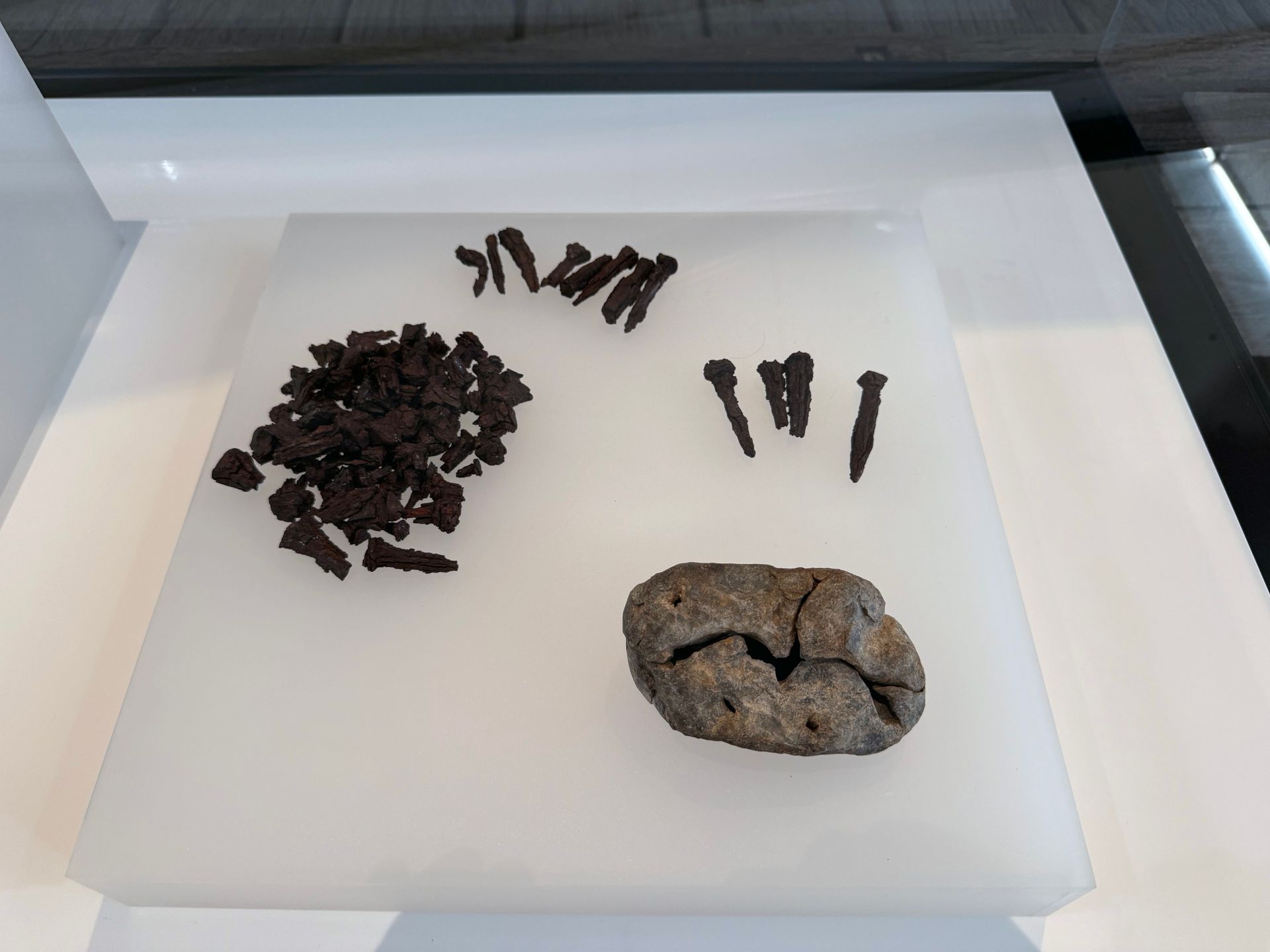
On Long Island, just across from Beacon Island, known as “the island of angry ghosts” or Batavia’s graveyard, archaeologists found a brutal weapon: a lead sheathing moulded into a ball, studded with nails, known as a morning star. This was documented by Pelsaert as a weapon used during the mutiny’s atrocities.
Nearby, a concentrated group of ship fastenings marks what is now believed to be the site of the gallows, where Cornelisz and other mutineers were tried, found guilty, and executed. Ship’s carpenters likely built a temporary structure for the hangings.
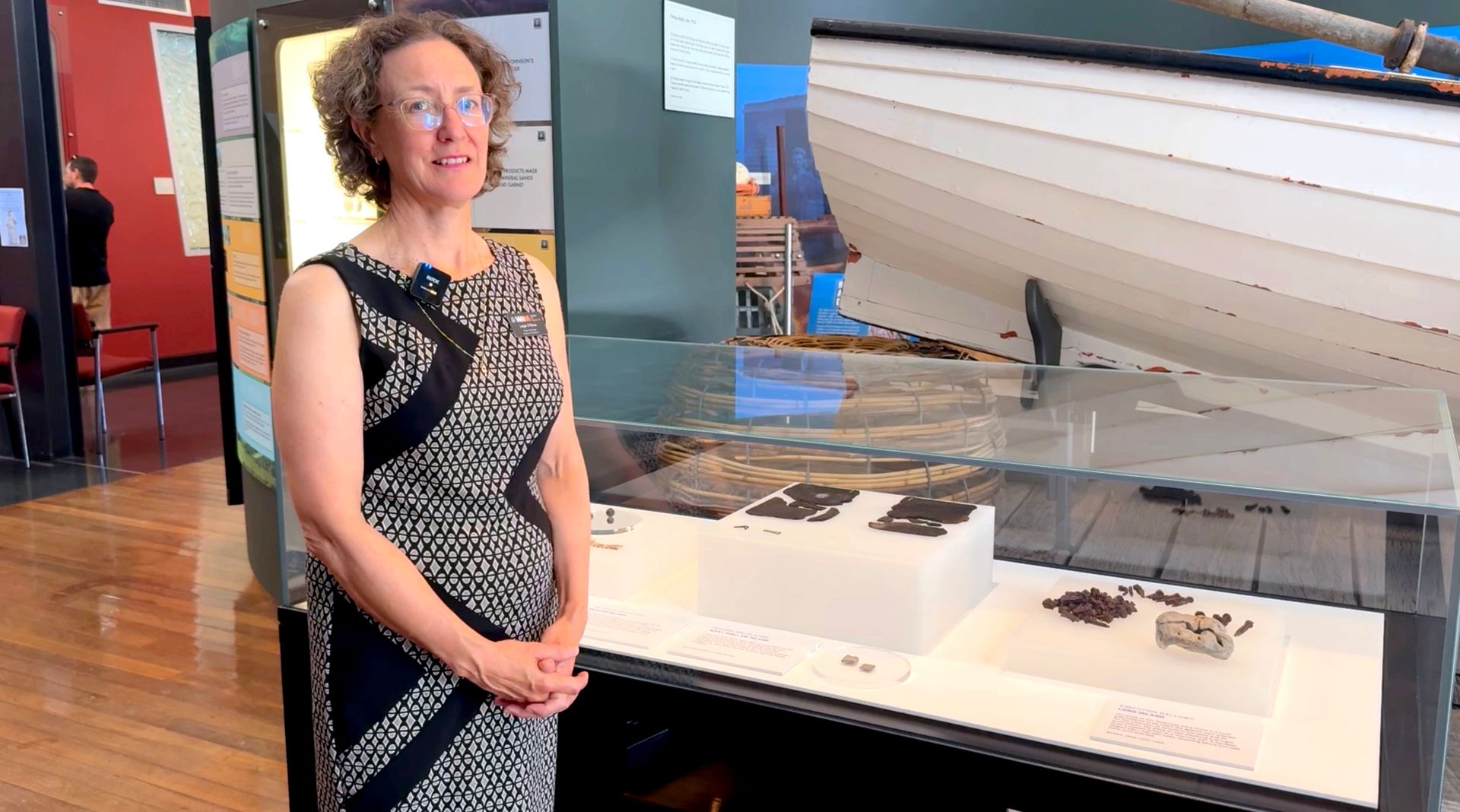
These powerful and poignant artefacts are now on display here at the Museum of Geraldton.
MAKE IT YOUR OWN
The story continues.
THERE’S ALWAYS MORE TO DISCOVER
Keep exploring.
Personal Belongings from Australia’s Earliest Europeans
“Batavia’s Graveyard” – Beacon Island
Faith and Leisure After the Wreck