

Collection
Ancient Tools and Materials
Exploring ancient tools and their uses
Welcome to the Museum of the Great Southern, where history comes alive through fascinating artefacts that whisper stories of ancient times. Here, you can immerse yourself in the rich tapestry of the region's past, brought to life through the tools and materials essential to the lives of the Indigenous peoples who have called this land home for millennia.
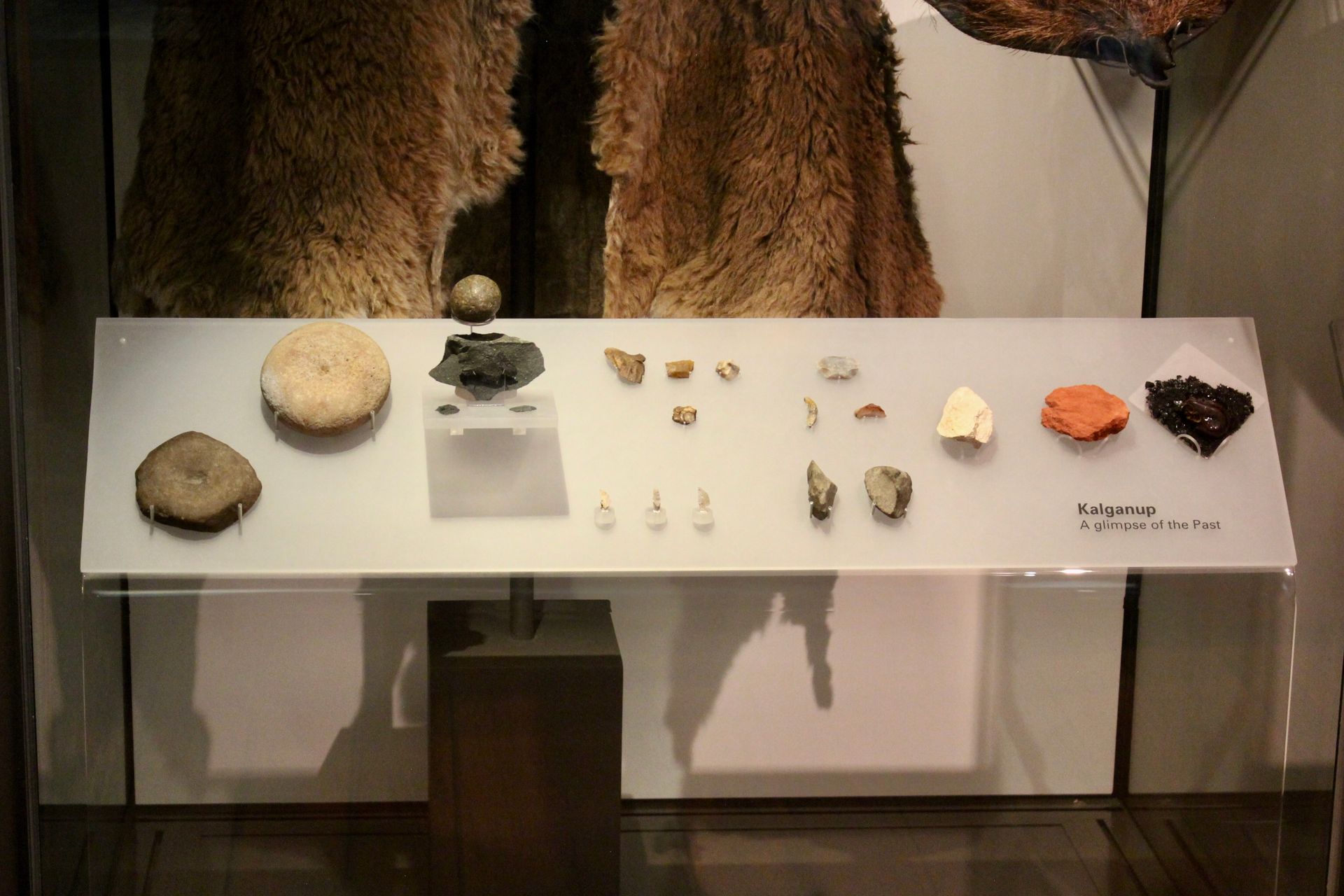
Step back in time as you discover two dimpled grindstones from Kendenup and Mt Barker. These versatile tools were once carried in skin bags, a testament to their importance in daily life. Used for cracking seeds and crafting stone tools, they were indispensable to the survival and ingenuity of the Indigenous communities. One of these grindstones, generously donated by J. Barnett in 1983, tells a story of adaptation and resourcefulness, having been cleverly repurposed as a scraper after breaking in half—a perfect example of making the most out of available resources.
Intriguing stone flakes and tools, some over 20,000 years old, were unearthed from the Kalgan Hall 2 excavations. These relics include a flake crafted from chert, a material that became unavailable for thousands of years due to rising sea levels. This scarcity adds to the mystery and allure of the artefact, inviting us to ponder the changing landscapes and how ancient peoples adapted to them. Explore adzes and microliths, ingeniously used for woodworking, often set with balga resin to create effective knives and spears that were pivotal for hunting and daily tasks.
Kodj stones, unique to the Noongar peoples, are rare treasures that speak volumes about the resourcefulness and craftsmanship of their makers. Discovered near Oyster Harbour and the Lower King River, these small axes highlight a sophisticated understanding of tool-making. Despite their rarity, they were likely resharpened and reused, demonstrating their immense value and the sustainable practices of their creators, who understood the importance of preserving resources.
Finally, delve into the cultural and practical significance of ochres and balga resin. White and red ochres were not merely pigments; they were vibrant expressions of identity, used for body paint in ceremonies that strengthened community bonds and cultural heritage. Balga resin played a crucial role in tool-making, providing a secure bond between stone, bone, or wood and their handles, a simple yet ingenious solution that ensured durability and efficiency.
MAKE IT YOUR OWN