

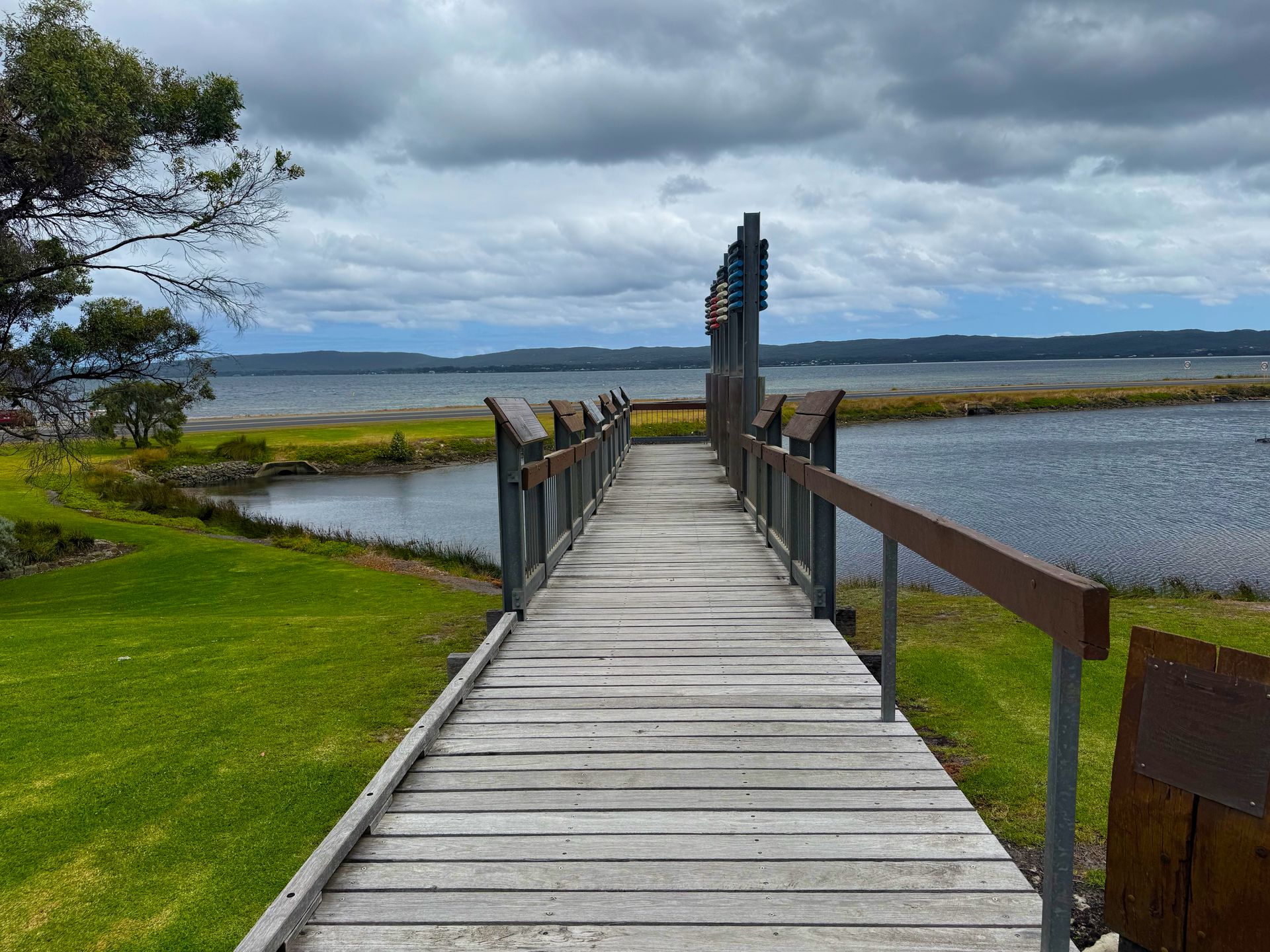
Explore the stories of resilience and connection at Welcome Walls Albany, where history meets community.
Story
Migration to Albany
Western Australia's Historic First Settlement
Albany was the first European settlement established in Western Australia. It was settled three years before the Swan River Colony — now known as Western Australia — was claimed in 1829. The Swan River Settlement was later named ‘Perth’ and became Western Australia’s capital city. Albany, with a population of around 35,000 in 2009, is one of the State's largest cities outside of Perth (population 1.8 million).
Before European occupation took place in 1826, the Albany area was long occupied by the local indigenous people — the Menang people — and later extensively explored by Europeans prior to occupation.
Aboriginal people called this place Kinjarling (the place of rain). For centuries the Menang occupied this site and hunted further north seasonally. Other Aboriginal groups belonging to the coastal Noongar — indigenous peoples of the South-Western region of Australia — also visited the area. Fish traps found in the estuaries in and around Albany indicate that the area supported a significant population of Aboriginal people.
Following European settlement, the site continued to be a gathering place of other cultures, as well as an arrival point for those settlers whose destination was Albany; for others who planned to settle in the region; and for migrants to other parts of Western Australia who disembarked there.
Before European settlement, the area was visited by many explorers, whalers and sealers. In 1622 the Dutch East India ship Leeuwin (Lioness) sighted a cape that they charted and named Cape Leeuwin. At that time it was the seventh ship to sight the continent that became Australia. Other merchantmen and explorers followed.
Afraid ‘foreigners’ might claim this area, the British sent their explorer George Vancouver to claim the south coast for Britain. Vancouver entered a beautiful natural harbour he surveyed and called King George III Sound. Near the present-day site of Albany he annexed this part of Australia on 26 September 1791. Vancouver enjoyed good relations with the local Aboriginal people.
Vancouver went on to survey the east coast of America where whalers and sealers learnt of the King George Sound, its fresh water, timber, colonies of seals, and pods of whales. Within a year, American, British and colonial whalers and sealers were marauding along Australia’s southern and west coast using King George Sound as a haven for supplies and shelter. The labour of Aborigines was often exploited, and women kidnapped, and so Aboriginal-European relations became more complex.
In 1792, Frenchman Bruni d'Entrecasteaux in charge of the Recherche and L'Esperance reached Cape Leeuwin on 5 December and explored eastward along the southern coast. The expedition did not enter King George Sound due to bad weather. French whalers followed to exploit resources of the area.
In 1801, Matthew Flinders entered King George Sound and stayed about a month before charting the rest of the southern Australian coastline. By 1806 he had completed the first circumnavigation of Australia.
Australian-born explorer Phillip Parker King visited King George Sound in 1822 on the Bathurst.
On 26 October 1826 Frenchman Dumont d'Urville in the L'Astrolabe visited King George Sound before sailing along the south coast to Port Jackson.
Fearful of a French claim to the area, in 1826 the British sent a military contingent to King George Sound. On 25 December 1826 Major Edmund Lockyer, accompanied by a surgeon, storekeeper, officers, and 23 convict tradesmen arrived aboard the brig Amity. Major Lockyer selected a site for military occupation, the first European settlement in Western Australia, and which is now Albany.
Major Lockyer named this settlement ‘Frederickstown’, after King George III's second son, the Duke of York and Albany. The settlement was officially named ‘Albany’ by Governor James Stirling in 1831. Later, political authority passed from the older colony of New South Wales to the Swan River Colony.
In 1831 Dr Alexander Collie, the first Government Magistrate arrived, accompanied by two families who became the first permanent town residents. More free settlers began to arrive and by 1837 the population numbered 171. While the harsh and yet unknown environment frustrated rural development, many locals turned to bay whaling and sealing. This eventually petered out in the 1870s.
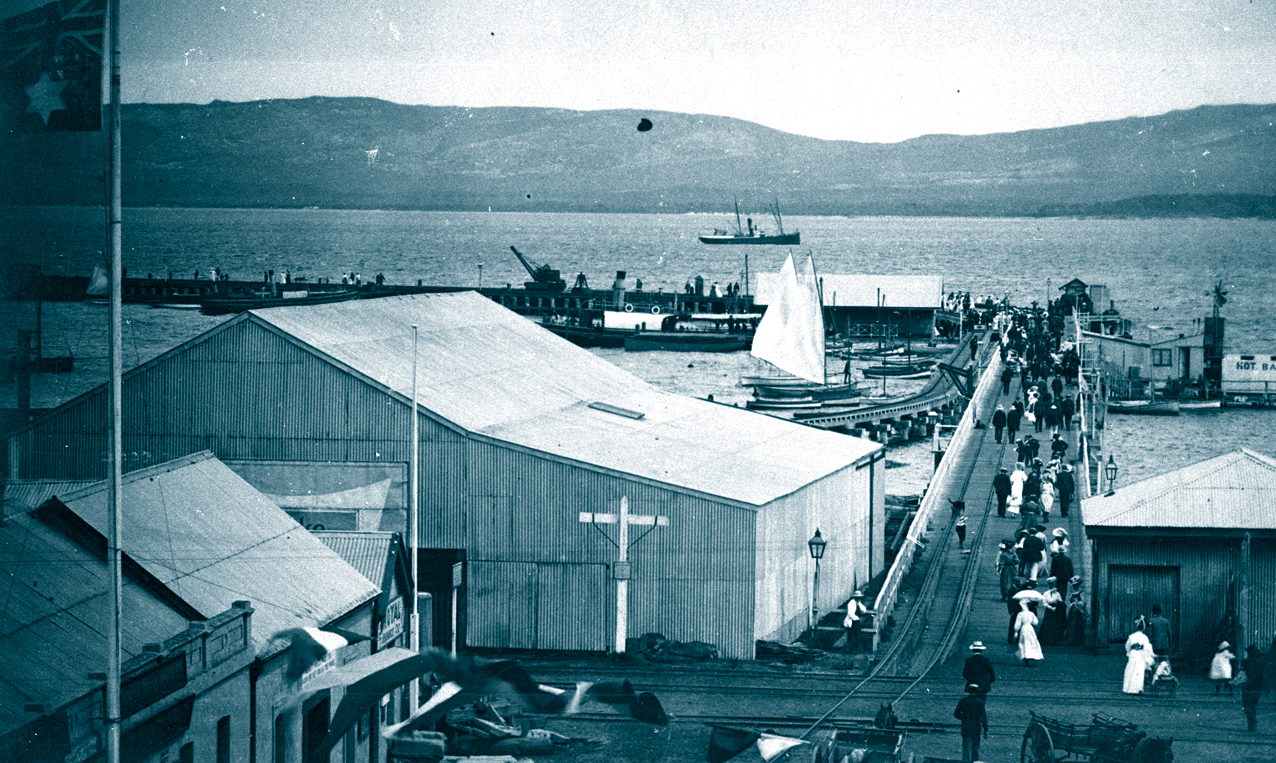
In 1851 British shipping companies made Albany a bunkering depot for mail and passenger steamers that were servicing the demands of a Victorian gold rush. The steamer depots saw new employment opportunities and Albany’s resident population grew to 700 but most migrants passed through to the other Australian states.
After 1885 the construction of a railway between Albany and Perth attracted more settlers to the Albany district and provided greater opportunities for trade and commerce. The population of the town increased from 1,200 in 1888 to 2,665 in 1891 but Albany remained a place of transit.
In the 1890s the rush to the goldfields around Southern Cross, Coolgardie and Kalgoorlie saw another wave of migration and new prosperity as passengers and goods for the goldfields came through the port. Although Albany’s population increased to 3,594 by 1901, by 1925 some 40,000 people had transited in Albany to some other destination.
When Fremantle’s inner harbour opened for business in 1897, shipping at Albany declined. Businesses closed or moved to Perth and people left the town. The population declined to 1,922 in 1905. Government settlement and agricultural schemes aimed at increasing food production brought new migrants to Albany and its districts. Small numbers of migrants continued to arrive at the Deepwater Jetty aboard industrial and cargo ships until the jetty was demolished in 1993.
MAKE IT YOUR OWN
The story continues.
THERE’S ALWAYS MORE TO DISCOVER