

Collection
Tools of the Afghan Cameleers
Innovation, Resilience, and the Camel Tracks of the Goldfields
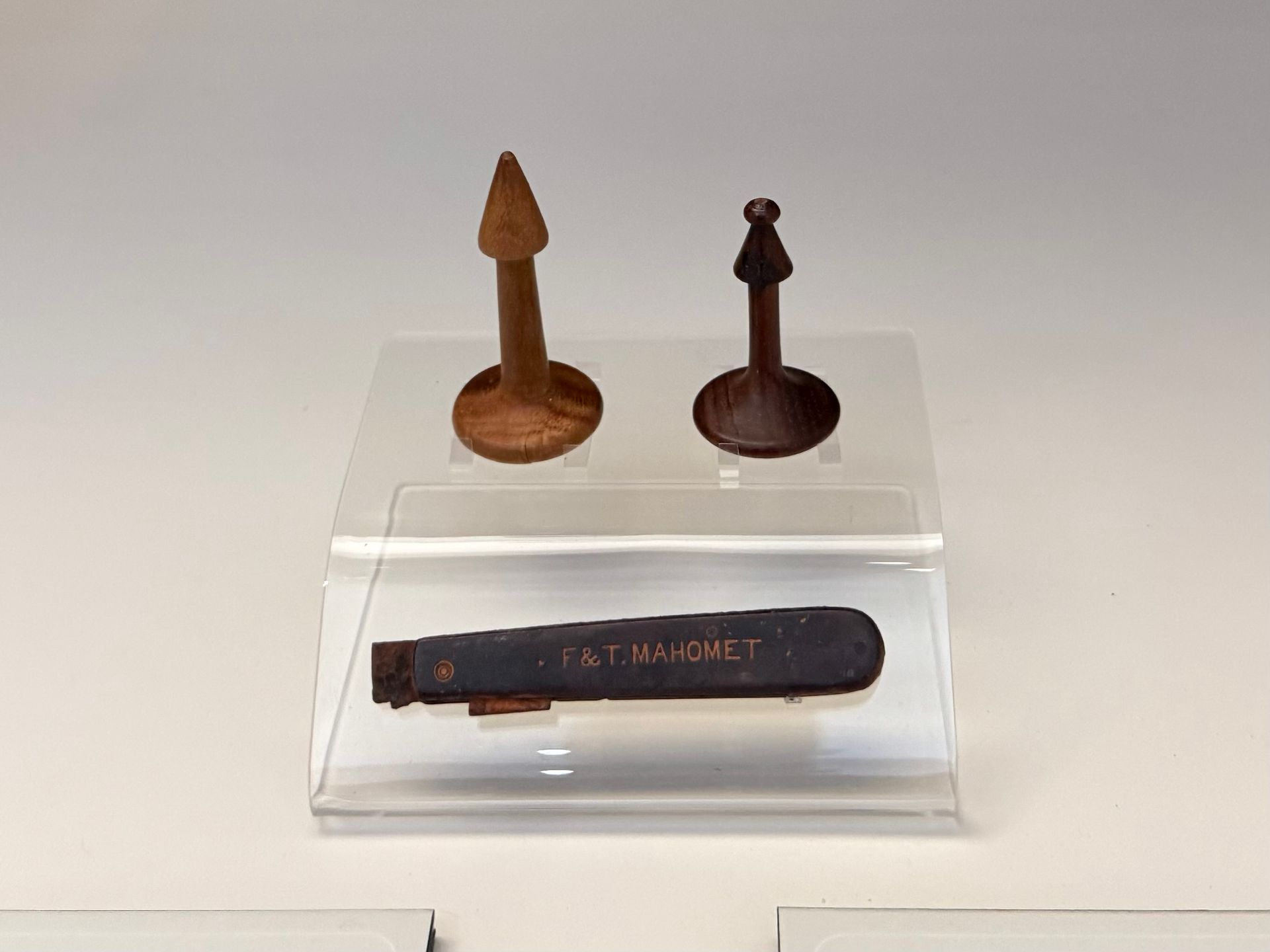
These simple yet ingenious nose pegs, made from olive wood, were used to lead camels by threading a rope through the soft cartilage of the nose. They were essential for managing the animals that powered transport across Western Australia’s harsh interior.
The knife handle, dated around 1890, is inscribed with “F & T Mahomet” and “Camel Stores” a tribute to Faiz and Tagh Mahomet, two Afghan brothers who faced prejudice on the Murchison Goldfields and turned instead to camel trading. By 1893, they had built a thriving business with over 100 camels delivering goods across the outback.
Together, these objects represent the strength, adaptability, and enduring legacy of the Afghan cameleers, men whose journeys helped shape the inland economy of Western Australia.
MAKE IT YOUR OWN