

Collection
The Inggarda Mission
A pivotal refuge for Aboriginal children
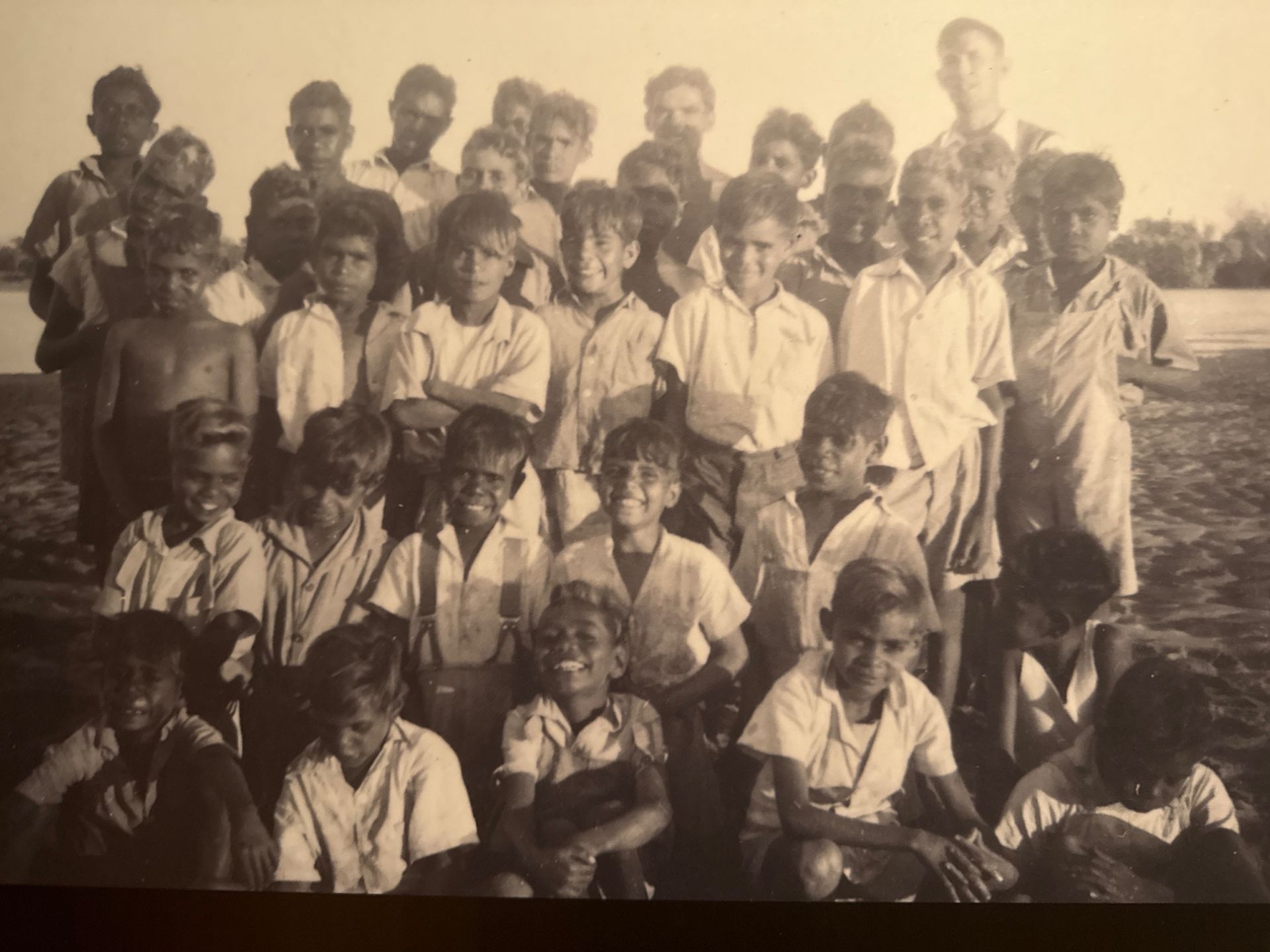
The Inggarda Mission remains an important place in the memories of many Aboriginal families across the Gascoyne. For nearly forty years it was home, school and community for hundreds of children. For some, it offered friendships, education and lifelong family connections. For others, it represents separation from family, strict discipline and the loss of language and culture.
The stories shared here reflect those different experiences.
Established by the Church of Christ in 1945 on the outskirts of Carnarvon, the Inggarda Mission provided accommodation and schooling for Aboriginal children at a time when government policies prevented many Aboriginal children from attending the local state school.
In 1956 these restrictions began to ease, with sixteen Aboriginal children attending Carnarvon Junior High School. By 1962 all children from the Mission attended schools in Carnarvon, and the Mission became primarily a hostel for students from across the Gascoyne and beyond.
Over its lifetime the Mission cared for hundreds of children from the Gascoyne, Pilbara, Goldfields, Geraldton and Kimberley before closing in 1984.
The memories preserved here remind us that there was no single Mission experience. Every child carried their own story.
“I remember the first day, it was terrible. I kicked and screamed, they had to hold me down, I thought it was the last thing on earth… When you come to think of it, it was not only us, it was our other families, like our father’s side family or our mother’s side family were there, and that’s how it clicked around that we were all family… and that’s how we coped.”
Gwen Peck, 2011
Finding Family
“We all came in from the stations… I went there with my uncle and another old bloke just for a drive I thought, but they left me there. One thing good, I found all the other kids that had gone away… Before going to the Mission, some of us experienced how the old Ganyara used to do things, the old songs and stories about our culture.”
Ron Craig, 2017
“I grew up in the Mission. When I was two weeks old they sent me from Onslow to Carnarvon Mission.”
Tammy Aldoes, 2020
Different Memories
“It was a good place in some ways. All the brothers and sisters were here together. We had a link through family to most of the kids here. Our parents saw us at Christmas. Other kids didn’t have family. Some people are upset still about their treatment at the Mission.”
Maureen Dodd, 2008
“Holiday time was the most exciting time of our lives through the school years, just to be back with our parents.”
Paul Baron, 2009
Separation and Discipline
“We were in the camp sleeping. Before Mum and Em could wake us up the welfare and police had come there… They just said, ‘We’re taking your kids.’ … We wanted to run away all the time… We learnt a lot there but sometimes the missionaries used to get really nasty with us… they used to tie them down on the table and cane them.”
Stella Telamus, 2011
“That’s the girls’ dormitory. The little girls were down the end on the right. That window, third from the left, was where my bed was.”
Stella Telamus, 2011
Childhood
“We’d pick up a stick and make a station gate… We’d make yards and bores and loading ramps… The girls would make little dollies and cars.”
Stephen Ruby, 2011
Learning to Work
“The senior girls had to be taught domestic work, like washing up, drying up, sweeping floors and ironing. They used to do that for the missionaries as well.”
Gwen Peck, 2009
“I went into the Mission when I was six… You were separated from your parents who were going back to the station… Some people said it was the best years of their life. For me it was not good. I suppose it depended on how tough things were. It might have been really bad at home.”
Paul Baron, 2009
Language
“We used to talk about the missionaries in language. They called it the ‘devil’s language’ and they’d try to stop us talking it. When we got back to the station the old people would correct us and say, ‘No, you’re talking wrong way.’ After a while we just had our own few words instead of being able to speak fluently.”
Paul Baron, 2011
MAKE IT YOUR OWN