

Film
Burrowing Bees
Dual Knowledge
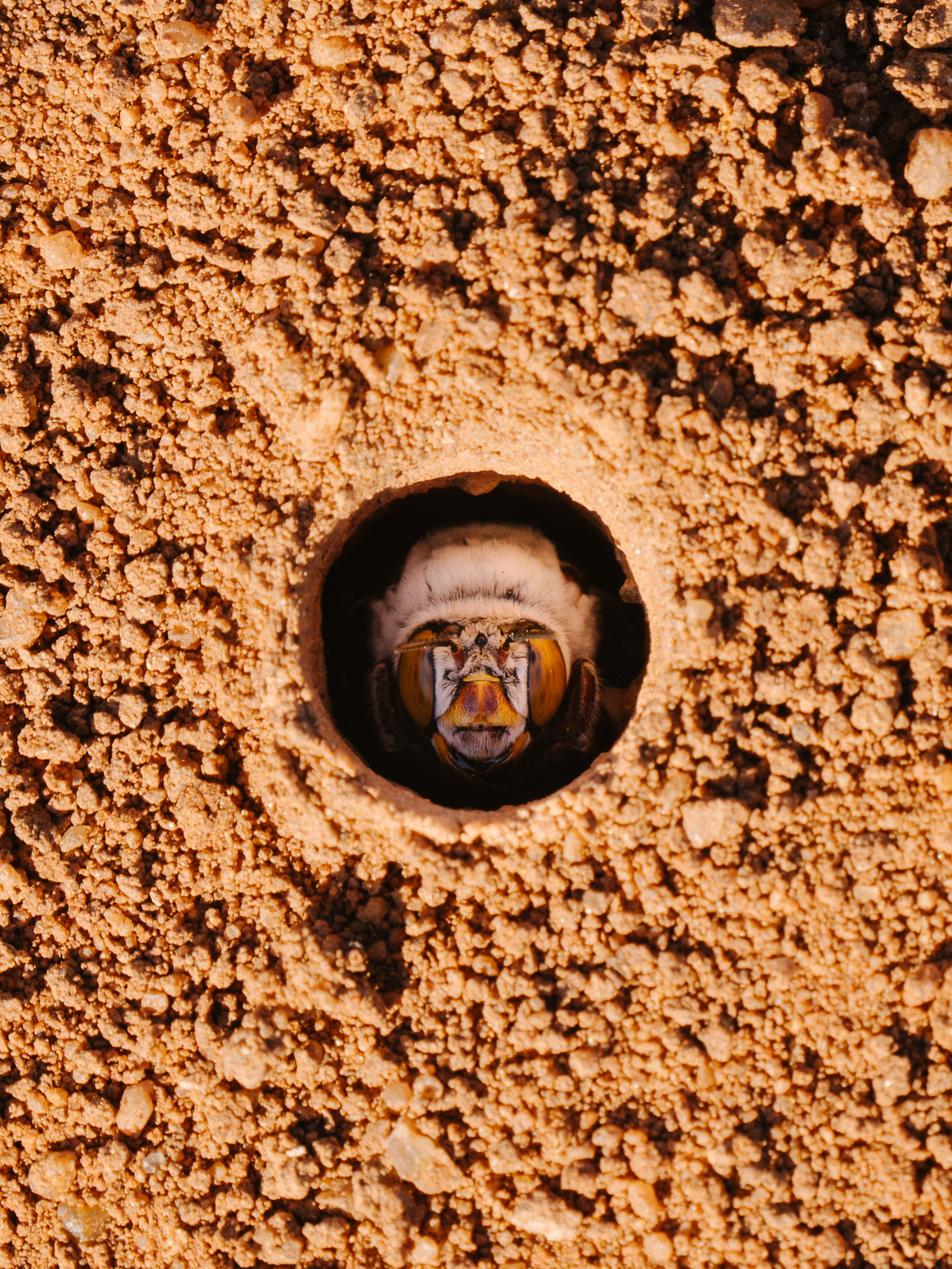
The Dawson’s Burrowing Bee (Amegilla dawsoni) is a big hairy bee that is unique to the Gascoyne region of Western Australia, and also called Mungurragurra or sometimes Jurrabarri. It is a solitary, ground-nesting species, and females burrow into bare clay flats to make their nests. Like many other 'solitary' bees, Dawson's Bee exhibits gregarious tendencies and females usually nest in close proximity to one another. An active nesting colony may contain up to 10,000 burrows and can provide one of the most exciting entomological experiences.
The Foundation for the WA Museum's 2021 Impact Circle members funded a legacy education program which focussed on the Mungurragurra/Dawson Burrowing Bees. This project was a collaboration between the WA Museum's Regions and the Science/Collections departments, supporting Gwoonwardu Mia Gascoyne Aboriginal Heritage and Cultural Centre. This collaboration has resulted in enhancing the visitors experience in the interpretive centre and creating multiple entry points for local and visiting primary and secondary schools.
Working closely with Antoinette (Toni) Roe, Yinggarda and Wadjarri Woman, and Mungurragurra/Burrowing Bees local cultural knowledge holder, Dr Terry Houston, Research Associate, Dept. of Terrestrial Zoology (Entomology) and Dr Nik Tartanic (WA Museum's Curator of Entomology), the ecology and knowledge of this species was explored from different perspectives. This project was a rare opportunity for these experts to join forces to create content that links both with Indigenous knowledge and the scientific research conducted by Terry around these unique specimens.
MAKE IT YOUR OWN